Snowy Range Pass

Snowy Range Pass

Wednesday, May 26, 2010

Eisenhower Farm


Just outside the boundary of the Gettysburg Battlefield is the retirement residence of General and President Dwight Eisenhower and his wife Mamie. They fell in love with the area when Eisenhower was stationed there during WWI, Commanding a tank training unit. After returning to the states at the end of WWII, they decided to purchase the first property that they ever owned as a retirement home in 1950. They settled on the 147 acre farm in Gettysburg.

Of course, as things turned out, he did not get to actually retire until completing his second term as president of the United States in 1961. However, they did use the farm during the presidency, including hosting foreign dignitaries.

They settled into the home in 1961 and in addition to enjoying the quiet life, he developed an award winning Angus cattle herd with his partners. He also took up painting as a hobby and a portrait of his grandchildren can be seen in the room he used to rest after his heart attack in 1955. Some of his other paintings are also shown in various parts of the home. The house was furnished with items that they have had for many years and with gifts they had received during his time in the White House.

It is a beautiful setting and the simple design of the house that had built to replace the decaying one on the property reflected the lifestyle of the couple. When you arrive you get a short orientation and then you are free to explore the house, barns and grounds at your leisure. It is an interesting place to visit and can be completed in just a few hours.

http://www.whitehouse.gov/about/presidents/dwightdeisenhower

http://en.wikipedia.org/wiki/Dwight_D._Eisenhower

Tuesday, May 25, 2010

Gettysburg-The battle


The battle of Gettysburg took place during the first three days in July 1863. The Confederate forces prevailed on day one in fierce fighting. They pushed the North off the defensive positions north and west of Gettysburg. This was due ,in part, to more of the Confederates arriving on the field than the Union Forces. The stage was set for day two, at which time more forces from both sides would come into play.

The next two days would see the most horrific fighting of the war. The most famous of these battles were known by the names of Wheatfield, Little Round Top and on the last day-Pickett’s charge. To put these battles into a little perspective-the attack on Pearl Harbor-“the day that will live in infamy” involved approximately 3000 casualties. The struggle in the Wheatfield had over 5000 casualties in just two hours. There were thousands more casualties during the Confederate attack on Little Round Top over extremely difficult terrain for the Confederates, also on the second day.

Over these two days the Confederate forces had gained ground, but had not pushed the Union forces off the high ground. General Lee was apparently convinced that this battle was his last best chance to defeat the Union forces and have an opportunity for a favorable outcome of the war. Thus on the third and final day of the battle, he ordered over 12,000 troops formed along seminary Ridge to make a frontal assault on the Union Center position on Cemetery Ridge, almost two miles away over open ground. For two hours before the assault, the Confederates pounded the Union positions with canons. The Union artillery responded, but fell silent near the end of the exchange. Perhaps, General Lee thought that he had silenced the Union canons, but in fact much of the Confederate canon shots landed behind the front lines of the Union forces.

The Confederate formation stepped out of the woods walking, and then running into heavy canon fire and finally the muskets of 6000 Union soldiers. In the end, some of the Confederates made it to the Union lines only to die there or be repulsed. Of the over 12000 starting the attack, less than half made it back to the Confederate lines in defeat. It was a crushing blow for the Confederate cause. Not only had General Lee lost so many of his hardened troops but also the majority of his most senior officers.

The only thing that saved the Confederate forces from complete destruction was the huge losses by the Union Army and the great disarray of the forces.

When I look at the terrain that the Confederates had to contend with in each of these battles, the outcome is not such a surprise. These pictures are of the terrain of Little Round Top from both views along with those of Pickett’s Charge.

Sunday, May 23, 2010

Gettysburg


We are camped within the battlefield known as Gettysburg. The campground is the Artillery Ridge Campground and was part of the battlefield. This is our third time visiting the battlefield. It is a famous and frightful place that cannot and should not be forgotten. There have been many volumes written on this battle, so I shall not go into any detail here, but have included a very short reference at the end of this entry.

This battle is often referred to as the turning point of the war. Up until this point two years into the war,1863, the North has not performed very well and missed many opportunities to gain an early end to the struggle. Indeed, until this battle, General Lee had not lost an engagement where he commanded the forces of the confederacy in the field.

It is a bit ironic that the turning point of the struggle would come in a battle that neither side had planned or was really prepared for. General Lee had been engaged in the first real invasion of the North in the war, hoping that in bringing the horror of war to the Union that the Federal Government would seek a negotiated peace. They met at Gettysburg by accident and in the end both sides sent their maximum resources to the struggle. The result was a bloody struggle that would result in the most casualties of any battle of the war. Depending on whose numbers you use, there were between 46,000 and 51,000 casualties.

This National Battlefield Park has the largest number of monuments of all such parks. The pictures in this blog will show just a few of the over 1500 in the park. I should mention that the largest of these is the Pennsylvania monument, which lists every soldier who took part in the battle. It remains a living monument in the sense that if someone new is discovered that took part in the battle their name is added and in some cases names have been removed. if it was discovered that they were not actually at the battle.

More to follow in the next blog.

http://en.wikipedia.org/wiki/Battle_of_Gettysburg

Saturday, May 22, 2010

Blogging


Our stay in the D.C. area included a lot of rain and time spent in the MH catching up on misc things. The Bull Run Regional Park is large and well maintained. If we return to the area, we will try to stay here again.

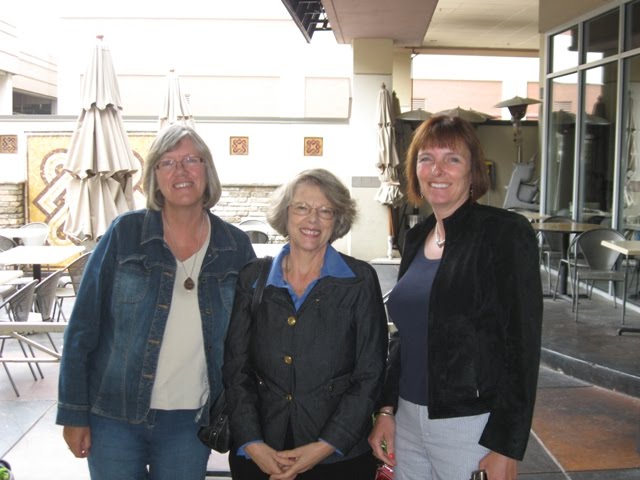
One of the things that we do when waiting out the rain, is reading the blogs we follow. We have made several contacts via these blogs and we were able to meet a blogger that Anneke has been reading for awhile. We arranged to meet for lunch and also invited our friend Marja to attend since everyone but me is Dutch. We met Petra, as arranged, and enjoyed a very nice lunch and conversation.

We have been able to meet bloggers “Holland Ranch” from Texas, Klaas “blips “from Minnesota and fellow full timers Gypsy Larry and our friends Corrie and Dan. Without the blogs, we would not have had the chance to meet these folks.

http://nederlandseamerikaan.blogspot.com

http://usadutch.com/blips

http://hollandranch.blogspot.com/

http://theryanrvexpress.blogspot.com/

http://www.gypsylarry.com/