Snowy Range Pass

Snowy Range Pass

Friday, December 18, 2015

Return to Nova Scotia

The time had come at the end of July for us to return to Nova Scotia and say goodbye to Newfoundland.  We boarded the ferry at Port Aux Basque to return to the same campground we left to head to Newfoundland. We hope that someday we might return to this amazing island.


We had one more important site to visit before leaving the northern coast of Nova Scotia.  On the northeastern coast is the reconstructed Fortress of Louisbourg.  This is a massive fortification with the first town settlement occurring in 1713 with the fortifications completed by the Mid 1740's and was among the largest such structures on the continent.  What was equally impressive to me, is the fact that the reconstruction that is available for tours is only one quarter of the size of the original fortified town.


Louisbourg played an important role in the struggle between the French and English for control of North American colonies and in particular, what is now Canada.  The Fortress was first overrun by British colonists in 1745.  Most of those colonists came from the colonies that later revolted against British and ultimately formed the United States.  Many of these colonists loss their lives in this important struggle.  Part of the treaty of 1748 returned the Fortress to French control, causing a lot of anger among the colonials who actually took the fortress.  This, was at least in some part, of the unhappiness that finally led the colonies to break with the British.  When it was ordered to retake the fortress in 1758, an overwhelming force of British regulars took control of the fortress and supposedly acted on their own, before additional orders were received,  systematically leveled the entire fortress to prevent it being handed back to the French through more negotiations.

The fortress shows what life was like during its active period with re-enactors everywhere along with guides and interpreters to answer questions.  There are period places to eat, see the merchant life in action and opportunities to observe the agricultural and other trades of the period.


For those interested in history, this is a must see location.


The end.


Tuesday, December 15, 2015

Codroy Valley

We continued south to Doyles, Newfoundland on the southwest corner of the island.  This area, The Codroy Valley is said to have the most fertile soil on the island The Grand Codroy Wetland is a very rich estuary and considered a site of international importance.  We stayed at the Grand Codroy  campground, which is owned by a very friendly and entertaining couple. Shortly after everyone arrived, the owners hosted a traditional Newfie night, were we would be made official Newfies. This provided we could pass the tests.  To start, we each had to down at least one shot of the local Screech-which I have previously mentioned, is a rum from the Caribbean.  It turned out that there would be more than the required one shot consumed by many of us.


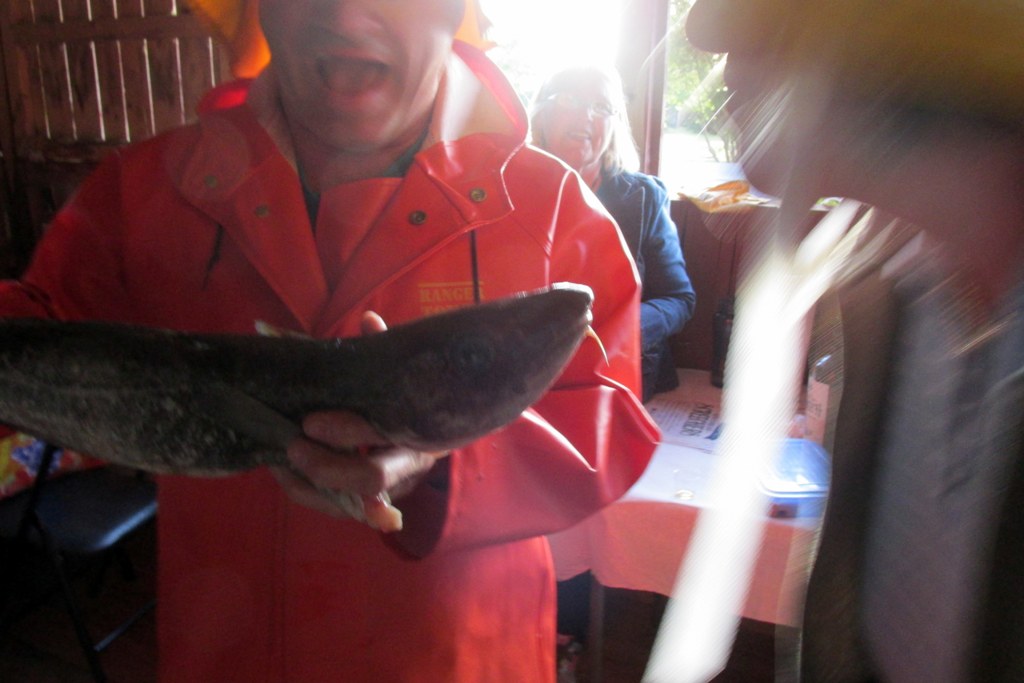
Next came the language test and most important of all the rite of kissing the cod.  Once everyone passed, there was a lot of celebratory dancing and other carrying on.


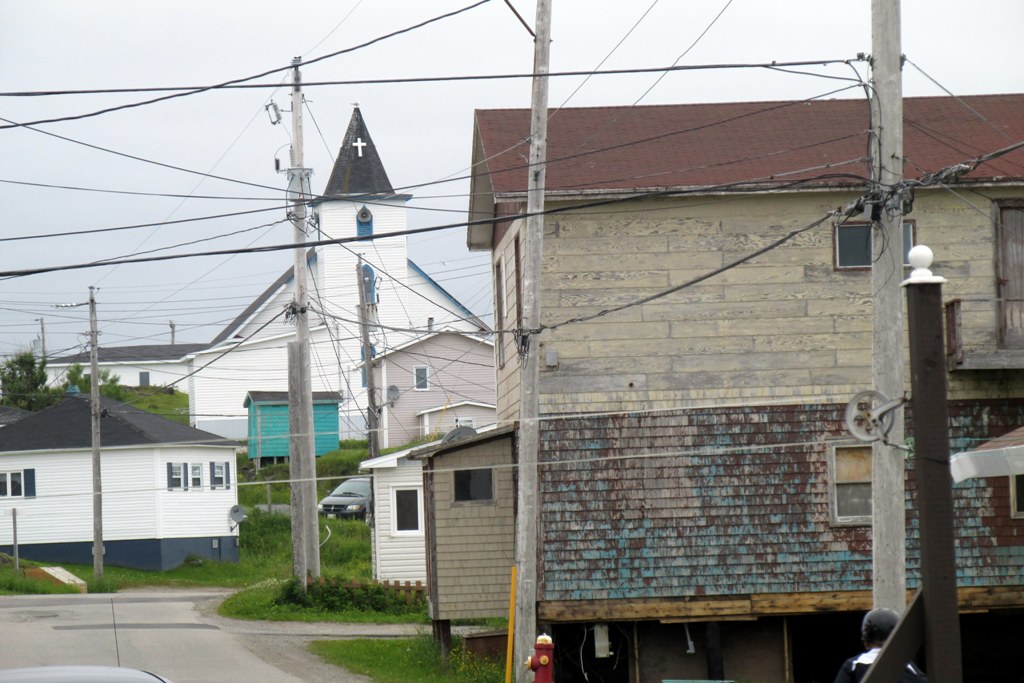
The next day, we took a tour of the valley with  the campground owners as our guides, as they have lived in the valley their entire lives.  Our first stop was the Precious Blood Church built in 1912 by volunteers.  Like a number of churches we have visited, the interior is more like a ship than a traditional church, since most of the volunteers made their living on the sea.  It was a impressive structure.


Next stop was the Heritage Train Site in Port Aux Basques.  In addition to getting an insight to the once important role of trains in Newfoundland, the site has an eclectic collection of memorabilia of the area that was also very interesting.  While there are no longer any trains in Newfoundland, trains were instrumental in getting Newfoundland and Labrador into the Canadian Federation.  When The Confederation was formed in the 1860's, Newfoundland/Labrador did not join.  After  WWII,  they found themselves in desperate financial condition.  The Confederation offered them a number of incentives to join, one of which was the promise to build railroads in Newfoundland to revive the economy.  So, in 1947, they joined the Confederation as the province of Newfoundland and Labrador.


Next we traveled to the Southern coastal village of Rose Blanche to visit the Granite Lighthouse. In my mind, this village and lighthouse really brings home the rough and hostile conditions that generations of fisherman experienced on this rugged coast. The lighthouse guide told a tale about how around Christmas one year in the 1930's, the lighthouse keeper left the lighthouse and walked to town to enjoy a drink with friends.  The  fishing vessel Monica Hartery trying to make port crashed on the rocks just offshore. After the fact, some villagers claimed to have heard some strange cries. In the morning light, a number of bodies were found on the shore and there were no survivors.  There were many such losses along this coast over the years.


Our last stop was the town of Isle Aux Morte or Dead Man's Island, so named from the many wrecks that occurred just offshore.  The attraction here is the smallest house in town that is over 100 years old and now serves as a museum.  In its past life it was the town's first school and chapel and is currently a museum for the town.